1. Top
  2. Things to do

Things to do

Beauty like a painting

A masterpiece of natural beauty

Please enjoy the natural beauty that shows different expressions depending on the season.

Sightseeing information

  • Immediately from "Arafune Resort"

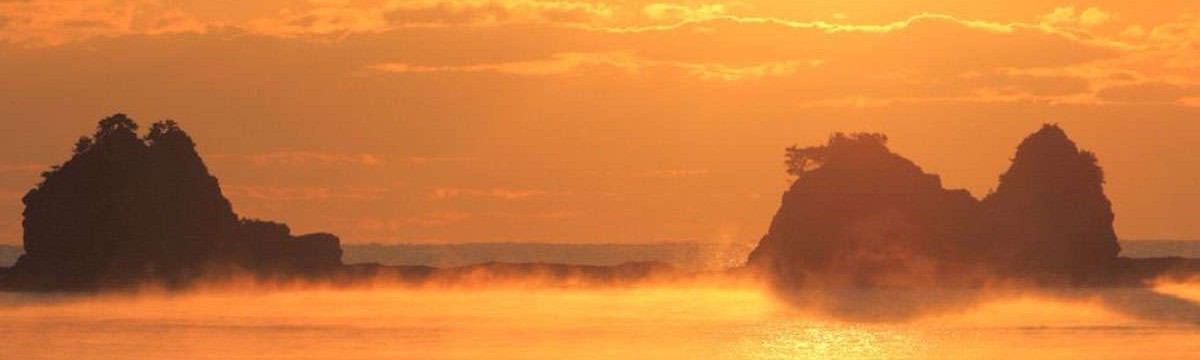
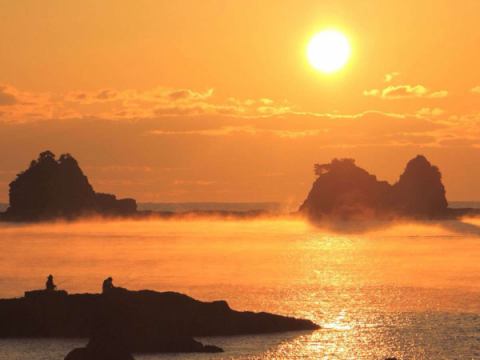
    • Sea Fog at Tawara

      On the coast of Tahara, in the early morning hours from December to January, you can see the fantastical "Sea Fog at Tawara," a fog that spreads over the sea like a sea of clouds.
      This phenomenon occurs when the cold air at dawn turns to water vapor and turns into mist during the particularly cold months of December through February. The golden Kaimu that shines in the morning sun is both mystical and impressive.
  • About 20 minutes by car from "Arafune Resort"

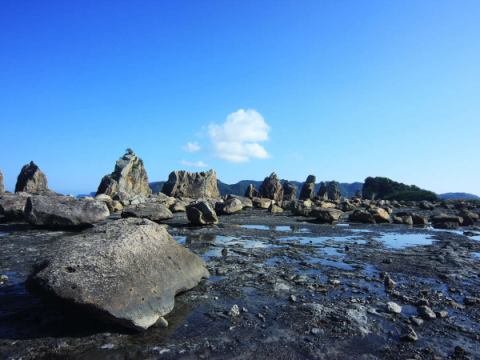
    • National Natural Monument Hashigui-iwa Rock

      From Kushimoto to Oshima Island, there are over 40 rock pillars of various sizes towering in a line stretching for about 850 meters.
      Due to erosion by the sea, only the hard parts of the rock remain, and this strange rock formation looks as if only the piles of a bridge are standing. Legend has it that Kobo Daishi and Tenno-Yasha made a bet and erected it in one night.
      Located in Yoshino Kumano National Park area, it is designated as a national natural monument.
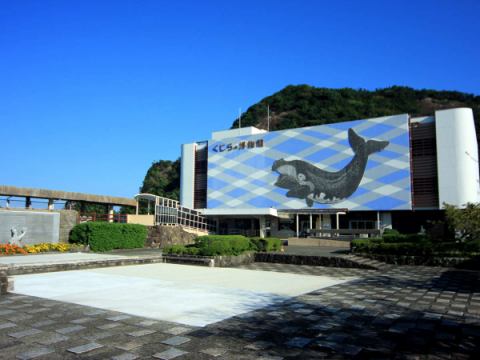
    • Whale Museum

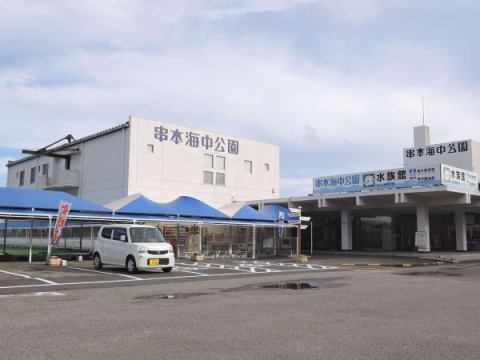
      The world's largest whale museum.
      Inside the museum, the center part from the 1st floor to the 3rd floor is a colonnade, and about 1,000 items such as materials related to whale ecology and whaling are exhibited.
      A dolphin show is held at the "show pool" next to the museum, a whale show is held at the "natural pool", and you can see the world-rare "bottlenose dolphin" at the oceanarium.
  • About 30 minutes by car from "Arafune Resort"

    • Kushimoto Marine Park

      Japan's first marine park designated in 1970.
      It is a facility where you can easily enjoy the sea of Kushimoto where the tropical and subtropical underwater world spreads.
      The Marimbillion has a 24m long underwater tunnel where you can enjoy sharks and stingrays swimming leisurely overhead.
      The underwater observatory located 140m offshore is famous.
    • Shionomisaki Lighthouse

      A chalk lighthouse built on a 30m cliff that has been illuminating ships going offshore as a key point of maritime traffic for more than 100 years since it was first lit in 1873, it is a symbol of the southernmost tip of Honshu.
      Designed by the British engineer Richard H. Brunton, the structure features a spiral staircase with 68 steps. Once you reach the top, the vast expanse of the Pacific Ocean unfolds before your eyes.
      There is also a museum under the lighthouse.
    • Turkey Memorial Hall

      In 1890, the Oshima Island warship Ertugrul was wrecked in a storm off the coast of Kashinosaki, Oshima, killing 580 of the 650 crew members.
      At that time, 69 people were rescued thanks to the dedicated rescue efforts of local residents, and Turkey Memorial Hall was erected as a symbol of their friendship.
      Currently, Turkey and Kushimoto Town have formed a friendship sister city tie-up and the circle of exchange is expanding.
    • Kashinosaki Lighthouse

      This is the oldest stone lighthouse in Japan, standing on the cliffs of Kashino at the eastern end of Oshima Island.
      It is still active and serves as a lighthouse, and although the interior is not open to the public, you can climb the spiral staircase and enjoy the magnificent view.
      Narcissus planted by an English engineer who was designed by an Englishman and was resident at the time of its founding is still clustered around.
    • Nachi Falls

      Nachi Falls, long revered as the sacred object of worship of Hiro Shrine—an auxiliary shrine of Kumano Nachi Taisha—has also been called “Ichi-no-Taki” (The First Waterfall) and is considered one of Japan’s three greatest waterfalls.
      With a drop of 133m, a width of 13m Choshiguchi, and a depth of 10m at its basin, it is the most famous waterfall in Japan. The sight of it flowing down from the depths of Kumano mountain range is breathtaking, and it is lit up on New Year's Eve.
      There is a gap in the bedrock at Choshiguchi, and the water flows down in three separate streams, hence the name "Misuji Falls."